

































The Common Denominator Initiative aims to strengthen understanding and unity on campus through open conversations and collaboration.
Created by psychology professor Bentley Gibson, the program encourages students and faculty to find common ground and rebuild relationships during a time of change.
“This is about helping people see that common thread that connects all of us,” Gibson said. “We can have different perspectives and still value each other’s humanity.”
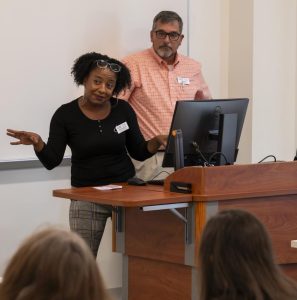
Professors Gibson and Akemon lead faculty in activities designed to break in-group bias and strengthen connections across departments.
The initiative launched in early August at a faculty retreat, where Gibson and political science professor Scott Akemon introduced the concept and showed how shared experiences can strengthen student relationships.
“We all have a lot more in common than we think,” Akemon said. “Finding that common denominator helps us move forward together.”
Faculty members discussed ways to create more open environments where students feel comfortable expressing their thoughts.
“We spend so much time focused on lessons and grading that it can be easy to miss the personal side of teaching,” Gibson said. “When we take time to listen to our students, we build trust and that trust helps them learn and grow.”
Gibson recently appeared on an episode of the Student Spin Podcast to reach a wider audience. Students will be able to view the episode later, where Gibson explains how the initiative began and what it hopes to achieve.
“It was exciting to speak directly to students about what this means for them,” Gibson said. “It’s not just an idea, but something we can all take part in.”
She said the program can inspire open-minded discussions and help students recognize the importance of empathy in communication.
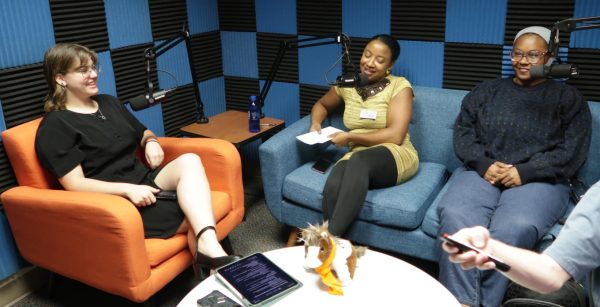
Professor Bentley Gibson and student Alana Kinnebrew record a podcast on the Floyd campus, discussing experiences of inclusion and exclusion and sharing the Common Denominator Initiative.
Conversations are already happening among students who share times when they have felt included or excluded. Gibson said those discussions help people connect in ways they might not have expected.
Biology major Dion Brown said being quiet and keeping to herself in middle and high school sometimes made her a target for teasing.
When asked whether it is important to find common ground with students who have different beliefs or perspectives, Brown said, “Yes, I do think so.” She added that conversations can feel more challenging with adults than peers. “It’s easier with classmates, but with older people, I don’t always know how to approach it.”
Brown also said initiatives like this could make campus more welcoming. “Even if we don’t agree on everything, trying to bridge differences helps people be more understanding and empathetic.”
“These conversations remind us that we’re all part of something bigger,” Gibson said. “When people start to see that, real understanding begins.”
The Common Denominator Initiative will continue throughout the year as faculty and students work together to strengthen communication and relationships across campus.